

Effects of Paecilomyces lilacinus and Bacillus pumilus on stem nematode and rhizosphere bacterial communities of sweet potato
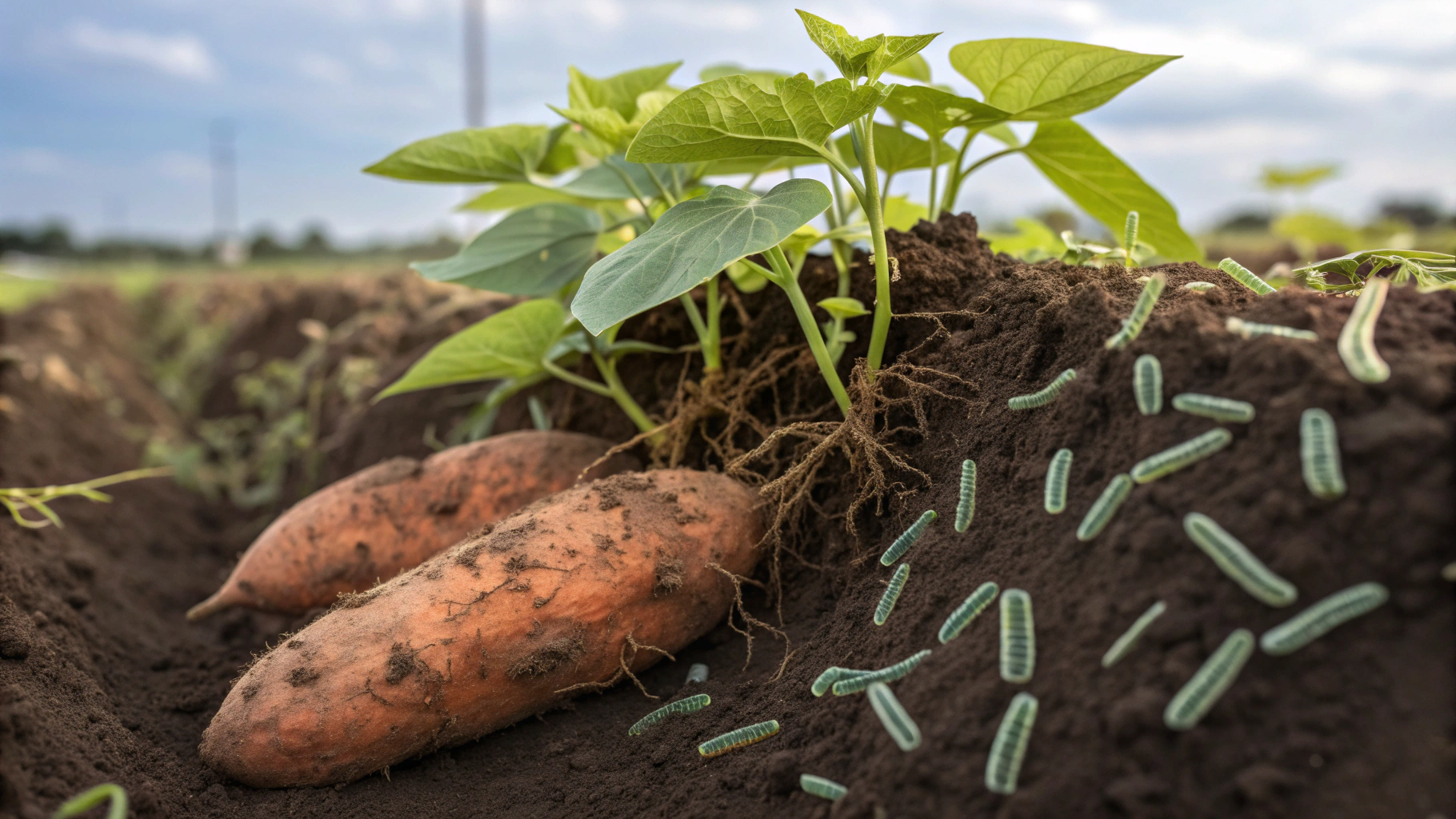
A 2024 study published in Scientific Reports by researchers from Hebei Normal University of Science and Technology and the Beijing Academy of Agriculture and Forestry Sciences examined how Paecilomyces lilacinus CS-Z and Bacillus pumilus Y-26 can control stem nematode (Ditylenchus destructor) infections in sweet potatoes while improving soil health .
Stem nematode is one of the most destructive pests in sweet potato production, causing yield losses of up to 50%. While chemical nematicides like fosthiazate are effective, they pose risks to soil ecosystems. This study investigated biological control alternatives using naturally occurring microbes.
In greenhouse trials, both P. lilacinus CS-Z and B. pumilus Y-26 achieved over 82% suppression of stem nematodes, matching the efficacy of chemical controls. Treated plants also showed stronger vine growth, higher root biomass, and reduced disease incidence compared to untreated controls.
Microbial analysis revealed that these treatments not only reduced nematode populations but also enriched beneficial bacterial communities in the rhizosphere. Populations of Actinobacteria, Bacillus, Streptomyces, Crossiella, and Gaiella increased, while harmful groups like Pseudarthrobacter decreased. The enhanced bacterial diversity supports improved nutrient cycling, plant resilience, and long-term soil health.
The researchers concluded that applying P. lilacinus and B. pumilus offers an effective, environmentally friendly alternative to synthetic nematicides. These biocontrol agents help maintain soil microbial balance while protecting sweet potato yields, marking a key step toward sustainable nematode management in agriculture.