
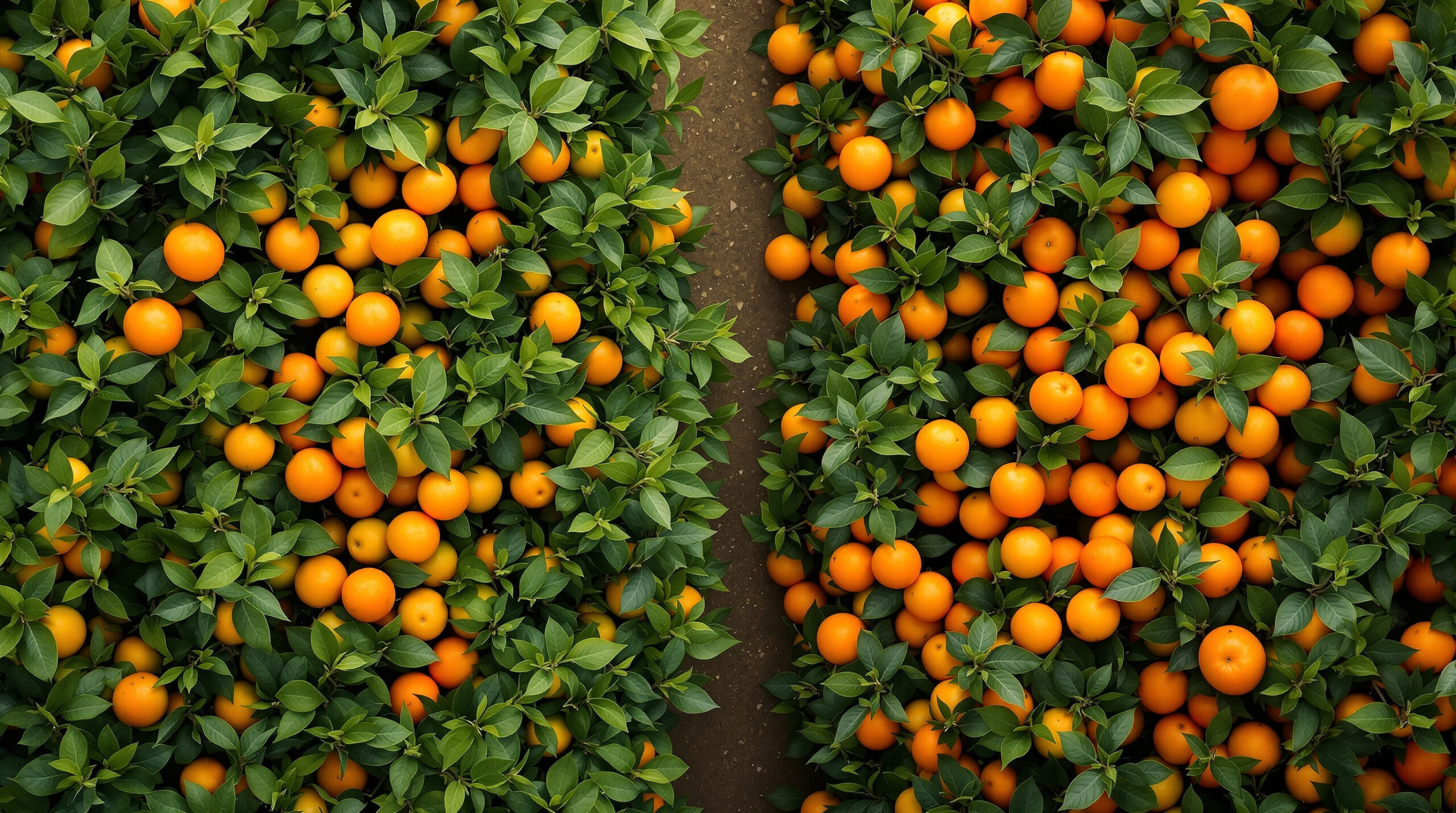

A 2025 study published in HortScience by researchers from the Volcani Center and the Hebrew University of Jerusalem examined how mild gibberellin (GA₃) applications can help reduce yield fluctuations in ‘Orri’ mandarin trees that naturally experience alternating high and low crop years .
‘Orri’ mandarins are known for their nonregular bearing pattern, producing heavy fruit loads in one season (on-crop) followed by low yields the next (off-crop). To test whether controlled gibberellin treatments could improve productivity during low-bearing years, researchers applied low concentrations of GA₃ (25–50 ppm) once or twice during the winter flowering induction period.
The results were clear: trees treated with 25 ppm GA₃ twice in December produced about 40% more fruit and higher total yield during off-crop years compared to untreated trees. These increases were linked to a higher number of mixed-type inflorescences—flowering structures that bear both leaves and flowers, which play a key role in fruit production. In contrast, no yield effect was seen during on-crop years, suggesting that the treatment mainly benefits trees recovering from a heavy season.
The researchers concluded that low-frequency, low-dose gibberellin applications during winter can serve as a practical management tool to enhance fruit set and reduce alternate bearing in ‘Orri’ mandarins. This approach offers a promising, cost-effective way to improve yield stability and orchard profitability.